

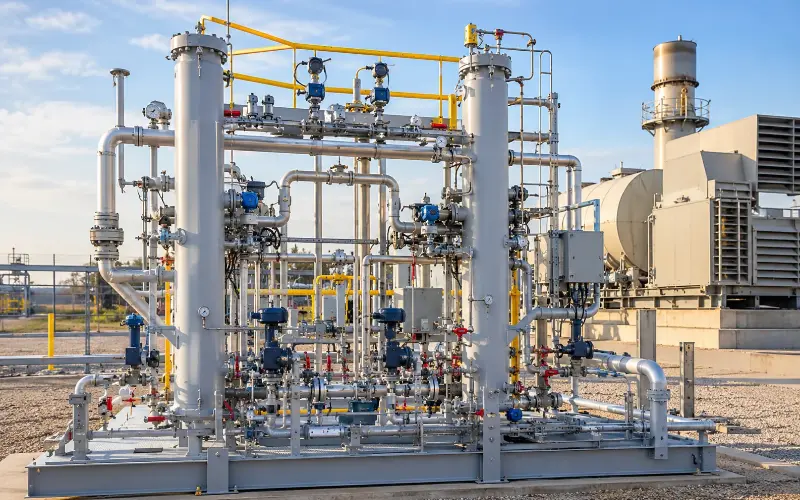
Natural gas is widely used as a fuel source for gas turbines, engines, burners, and other industrial equipment. However, natural gas arriving from a production facility, pipeline, or other upstream source may contain liquids, moisture, solid particles, and other contaminants that can create problems for downstream equipment.
A fuel gas conditioning system prepares the gas before it reaches the end-use equipment. Depending on the application, the system can provide filtration and separation, pressure reduction, metering, and other conditioning functions required by the fuel specification.
For gas turbine applications, maintaining the required fuel quality and operating conditions is particularly important. A properly engineered fuel gas conditioning skid can help provide a controlled and consistent fuel supply to the turbine.
EN-FAB, Inc. designs custom fuel gas skids for specific applications, with system configuration and sizing based on factors such as raw gas composition, plant size, and the intended use of the natural gas.
A fuel gas conditioning system is a packaged system designed to prepare natural gas for use as fuel in equipment such as gas turbines, engines, and burners.
Raw natural gas can contain different types of contaminants depending on where the gas comes from and how it has been processed. These may include:
The specific contaminants present depend on the gas source and upstream processing conditions.
A conditioning system can be configured to address the contaminants and operating conditions relevant to a particular application.
In a typical arrangement, incoming gas passes through a scrubber or filter separator to remove liquids and solid particles. The gas can then be measured and its pressure reduced to the required operating level. Additional equipment may be incorporated when required by the application.
Gas turbines require fuel within specified operating conditions. The fuel system therefore needs to receive gas with appropriate cleanliness, pressure, temperature, and flow characteristics.
Untreated fuel gas can contain contaminants that may affect turbines, engines, burners, fuel control equipment, and other downstream components.
For example, liquid carryover can create operational problems, while solid particles can contribute to erosion, fouling, or blockage in sensitive components.
Industry technical guidance also identifies filtration and separation as important measures for controlling particulate contamination in gas turbine fuel systems.
A fuel gas conditioning system provides a controlled point between the incoming gas supply and the gas turbine fuel system.
The exact equipment required depends on the gas composition and the turbine manufacturer's fuel requirements.
Although system designs vary, a fuel gas conditioning skid generally follows a basic process:
Fuel Gas Inlet → Separation/Filtration → Pressure Control → Metering → Conditioned Fuel Gas → Gas Turbine
The actual process arrangement may include additional equipment depending on the project.
Natural gas enters the conditioning system from an upstream pipeline, production facility, gas processing system, or another gas source.
The incoming gas pressure, temperature, composition, flow rate, and contaminant levels need to be considered during system design.
The first major objective is to remove unwanted liquids and solid particles.
A filter separator or scrubber can separate contaminants from the gas stream before the gas reaches downstream equipment.
EN-FAB lists filter separators among the major components of its fuel gas skids.
The incoming gas pressure may be higher than the pressure required by the downstream fuel system.
Pressure reducing control valves can be used to regulate the gas pressure to the required operating conditions.
Stable pressure control is an important part of delivering fuel to gas turbine equipment.
Fuel gas may also need to be measured for operational monitoring, allocation, or other project requirements.
EN-FAB lists an orifice meter among the major components that can be incorporated into its fuel gas conditioning systems.
After the required treatment, separation, pressure control, and measurement, the conditioned fuel gas is delivered to the downstream gas turbine or other fuel-consuming equipment.
The final operating conditions should be established according to the equipment manufacturer's requirements and project specifications.
The components used in a fuel gas conditioning system vary from project to project. EN-FAB identifies three major components for its fuel gas skids:
A filter separator is used to remove unwanted solids and liquids from the gas stream.
Depending on the gas source, contaminants can include sand, salts, reservoir fines, corrosion products, moisture, and condensate.
A pressure reducing control valve helps bring the incoming gas pressure down to the required downstream operating pressure.
Proper pressure control is particularly important when the upstream gas supply operates at a significantly different pressure from the equipment receiving the fuel.
An orifice meter can be used to measure gas flow.
Gas measurement can provide useful operational information and may also be required for specific facility or project requirements.
Filtration and separation are important functions within a fuel gas conditioning system.
Natural gas can carry liquids and particulate matter from upstream production and processing equipment. Without appropriate separation, these contaminants can reach downstream fuel equipment.
A filter separator provides a controlled location for removing these unwanted materials before the gas continues through the system.
The required filtration and separation arrangement depends on the expected contaminant load, gas composition, flow rate, pressure, temperature, and downstream requirements.
For gas turbine applications, the objective is to deliver fuel that meets the required cleanliness and operating specifications.
Natural gas may arrive at a pressure that is higher than the pressure required by the gas turbine fuel system.
A fuel gas conditioning skid can incorporate pressure reduction equipment to regulate the gas before it reaches the turbine.
The pressure control system should be designed around:
A properly designed pressure reduction system can provide controlled fuel delivery while accommodating changes in operating conditions.
Some fuel gas applications may require heating or superheating in addition to filtration and pressure control.
Temperature requirements depend on the gas composition, pressure conditions, dew point, and downstream equipment requirements.
Pressure reduction can produce a temperature drop due to the Joule-Thomson effect. Depending on the gas and operating conditions, heating may therefore be incorporated to maintain the required fuel temperature and avoid undesirable condensation or hydrate-related conditions.
Fuel gas conditioning systems used for gas turbines can include heating when required by the application.
The heating method and required duty should be established during the engineering phase based on actual process conditions.
Understanding the incoming gas composition is essential when designing a fuel gas conditioning system.
Solid contaminants can include:
These particles can create erosion, deposits, or blockage in downstream equipment.
Liquid contamination can include:
Liquid carryover is an important consideration in gas turbine fuel systems.
Depending on the source, natural gas can contain components such as hydrogen sulfide, carbon dioxide, and sulfur compounds.
The required treatment depends on the gas composition and the specifications of the downstream equipment.
EN-FAB notes that raw natural gas can contain sour, solid, and liquid components, reinforcing the importance of designing conditioning equipment around the actual gas characteristics.
Instead of installing individual components separately at the project site, fuel gas equipment can be supplied as a packaged skid.
A skid-mounted approach can provide several project advantages.
Preassembled equipment can reduce the amount of field assembly required.
EN-FAB specifically identifies minimal field erection and faster startup among the benefits of its pre-packaged fuel gas systems.
Components can be integrated into a single engineered package, helping simplify the overall installation.
A packaged system can undergo Factory Acceptance Testing (FAT) before shipment.
This provides an opportunity to verify the system before it reaches the project site.
EN-FAB lists FAT prior to shipment among the benefits of its fuel gas skid approach.
A complete package can also simplify project coordination because multiple components are engineered and integrated as one system.
EN-FAB describes single-source accountability as another benefit of its pre-packaged approach.
Fuel gas conditioning systems can be used in a range of oil and gas and industrial applications.
Common applications include:
The system configuration should always be selected according to the requirements of the specific application.
Choosing a fuel gas conditioning system requires more than selecting individual components.
The complete system should be engineered around the incoming gas and the requirements of the downstream equipment.
Important design considerations include:
What contaminants are present in the incoming gas?
What are the minimum, normal, and maximum gas flow rates?
What is the available inlet pressure, and what pressure does the downstream equipment require?
What are the minimum and maximum gas temperatures? Is gas heating required?
How much liquid and particulate contamination is expected?
What fuel quality and operating conditions are specified by the turbine manufacturer?
Does the project require fuel gas measurement or custody-transfer measurement?
Is the equipment intended for an onshore or offshore facility? Are there space, environmental, hazardous-area, or installation constraints?
Answering these questions helps engineers develop a fuel gas conditioning package that is appropriate for the application.
Not every gas facility has the same fuel requirements.
Gas composition, pressure, flow rate, plant configuration, and end use can vary significantly between projects.
For this reason, EN-FAB states that its Fuel Gas Skids are custom designed for specific applications.
A custom-engineered approach allows the system configuration to be developed around the actual process requirements instead of relying on a one-size-fits-all package.
This can be particularly important for complex oil and gas facilities and gas turbine applications where multiple process conditions must be considered together.
Modular process equipment can integrate multiple components into a skid-mounted package that is fabricated and tested before delivery.
EN-FAB's modular production systems include fuel gas conditioning systems among its packaged process applications. The company describes modular systems as integrating process equipment, piping, valves, instrumentation, and structural support into skid-mounted packages.
For projects where installation time, site work, and equipment integration are important considerations, a modular fuel gas conditioning package can simplify project execution.
A fuel gas conditioning system for gas turbines provides an important interface between the natural gas supply and the turbine fuel system.
The system can be designed to remove liquids and solids, regulate fuel gas pressure, provide gas measurement, and incorporate heating or other treatment when required.
The correct configuration depends on the characteristics of the incoming gas and the requirements of the downstream equipment. Gas composition, flow rate, pressure, temperature, contaminant levels, turbine specifications, and site conditions should all be considered during engineering.
For projects requiring a packaged solution, a custom-designed fuel gas conditioning skid can integrate filtration, separation, pressure control, metering, and other required functions into a single engineered system.
EN-FAB designs and fabricates custom fuel gas skids for specific applications in the oil and gas industry.
If your project requires a fuel gas conditioning skid for a gas turbine, engine, burner, or other industrial application, the system should be designed around your specific process conditions.
Contact EN-FAB to discuss your fuel gas conditioning requirements and request a customized solution.
A fuel gas conditioning system prepares natural gas for use by downstream equipment such as gas turbines, engines, and burners. Depending on the application, it can remove liquids and solids, control pressure, measure gas flow, and provide additional conditioning functions.
Gas turbines require fuel that meets specific cleanliness and operating conditions. Conditioning equipment can help remove unwanted liquids and solids and provide controlled pressure and other required fuel conditions.
A fuel gas conditioning skid is a packaged arrangement of equipment used to condition fuel gas before it reaches downstream equipment. Skid-mounted systems can integrate components such as filter separators, pressure control valves, and gas meters.
The exact configuration varies by application. EN-FAB identifies filter separators, pressure reducing control valves, and orifice meters as major components of its fuel gas skids.
Yes. Fuel gas conditioning requirements vary according to gas composition, plant size, operating conditions, and end use. EN-FAB states that its fuel gas skids are custom designed for specific applications.
