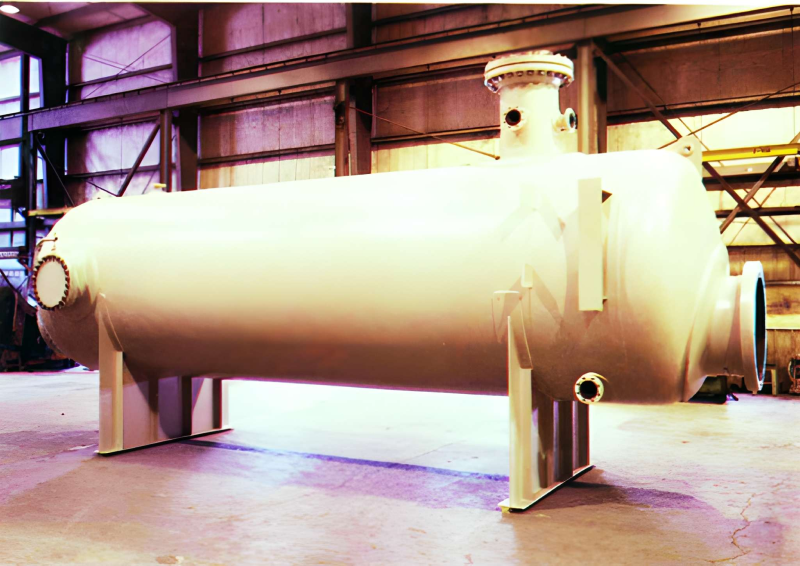

EN-FAB deaerators are used to separate and remove entrained air and gas from petroleum and other liquid products, especially in metering applications.
Since the elimination of gas and air is essential to metering accuracy, the EN-FAB deaerator is a necessary part of any metering system wherever there is a possibility that air may be introduced or entrained into the system.
EN-FAB, Inc. deaerators are designed to eliminate free air or gas from hydrocarbon liquids flowing under pressure through piping. This is particularly important in applications where the liquid flow is being metered.
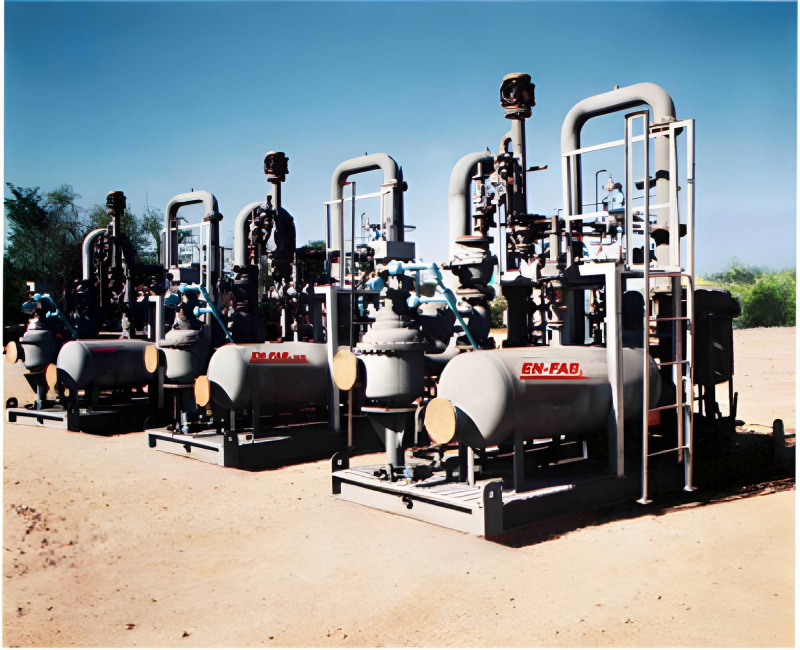
Basic Operation Principles of the EN-FAB Deaerator
The gas deaerator may be configured as either a horizontal or vertical vessel, depending on application requirements and space limitations. Each vessel is sized to provide sufficient retention time for gas and air bubbles to rise to the top. To aid in removal, the interior of the deaerator contains a series of inclined steel scrubber plates that collect and segregate bubbles, allowing them to coalesce and migrate upward.
General Theory of Differential Gravity Separation of Particles
Gravity clarification enables the removal of particles that exhibit density differences from their carrier fluid. Separation is achieved by slowing the flow stream for a sufficient period, allowing particles to separate. Rising bubbles possess a “rise rate” with negative velocities, and Stokes’ Law defines the theoretical terminal velocities of these bubbles. Larger bubble size results in higher separation efficiency.
Horizontal Versus Vertical
For deaerators with identical dimensions, horizontal units perform more efficiently than vertical units. This is due to the longer horizontal travel distance and shorter vertical distance required for bubble separation. Performance is further enhanced by parallel scrubber plates that promote laminar flow. Slots in the scrubber plates provide additional escape paths for bubbles. In vertical units, bubbles rise counter to the liquid flow and are expelled through a pneumatic float-actuated control valve, commonly referred to as an air eliminator valve.
Installation
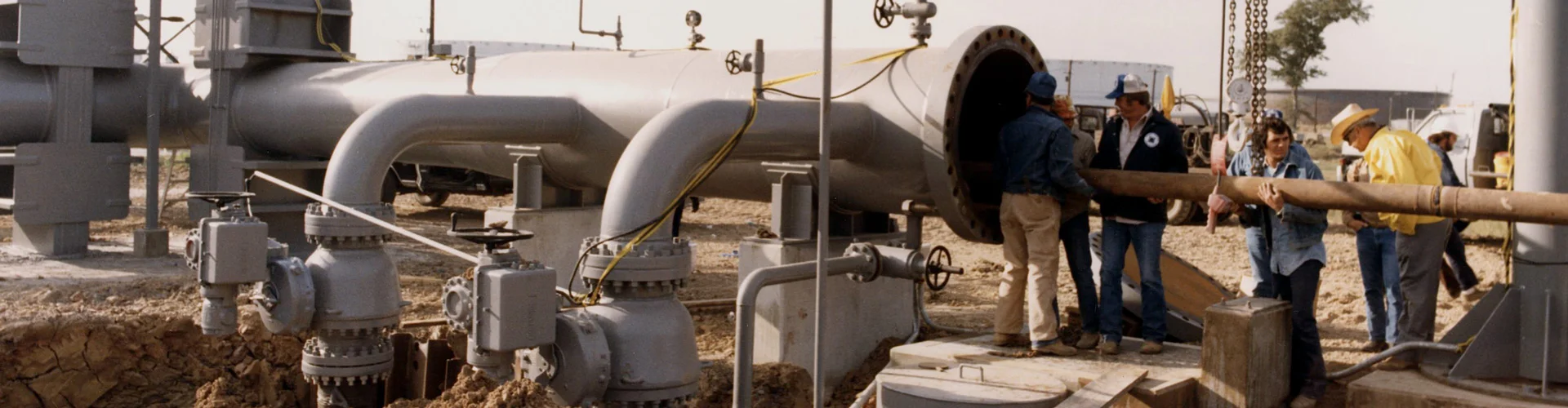
Deaerators should be installed on a level foundation and positioned as close to the meter as possible. Vapor discharged from the eliminator valve should be piped to a safe and convenient location. A suitable flame arrestor must be installed at the end of the vapor eliminator discharge piping.